Every plant has one: a machine that still works, mostly, but is getting harder to keep running. Spares take longer to find. The controller is out of support. The one technician who understands it is approaching retirement.
The instinct is to budget for a replacement. Often that's the wrong call — but not always. Here's a framework for telling the difference.
Separate the machine into two questions
The mistake most often made is treating the machine as a single thing. It isn't. It's a mechanical structure and a control system, and they age very differently.
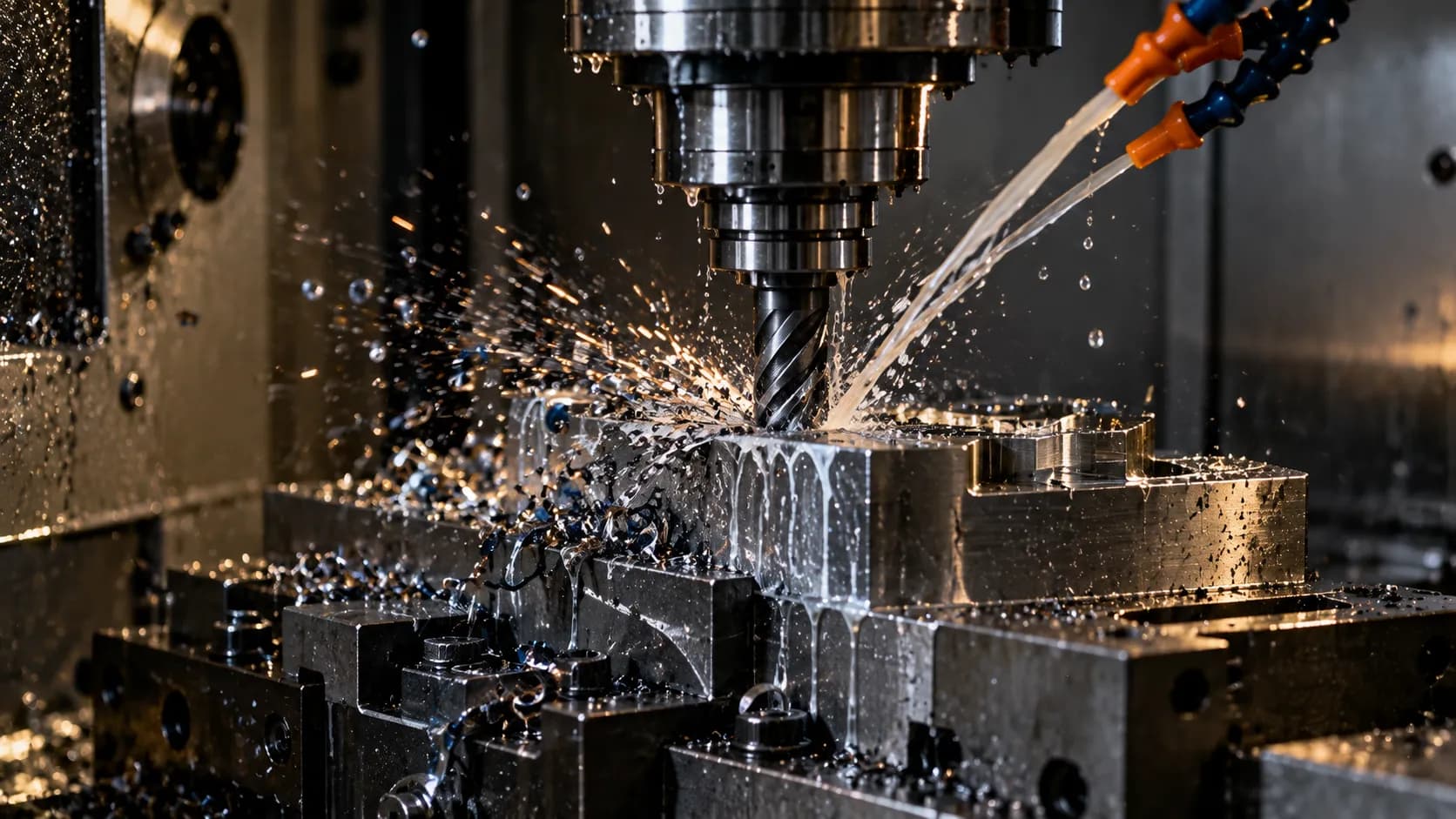
Mechanical structures age slowly. A well-built steel frame, hardened ways, and a solid drivetrain can last decades. Wear items — bearings, seals, belts, guides — are consumables, not end-of-life indicators.
Control systems age fast. A PLC platform can go from current to obsolete in ten to fifteen years. Once the manufacturer ends support, spares become scarce, programming software stops running on modern operating systems, and knowledge disappears.
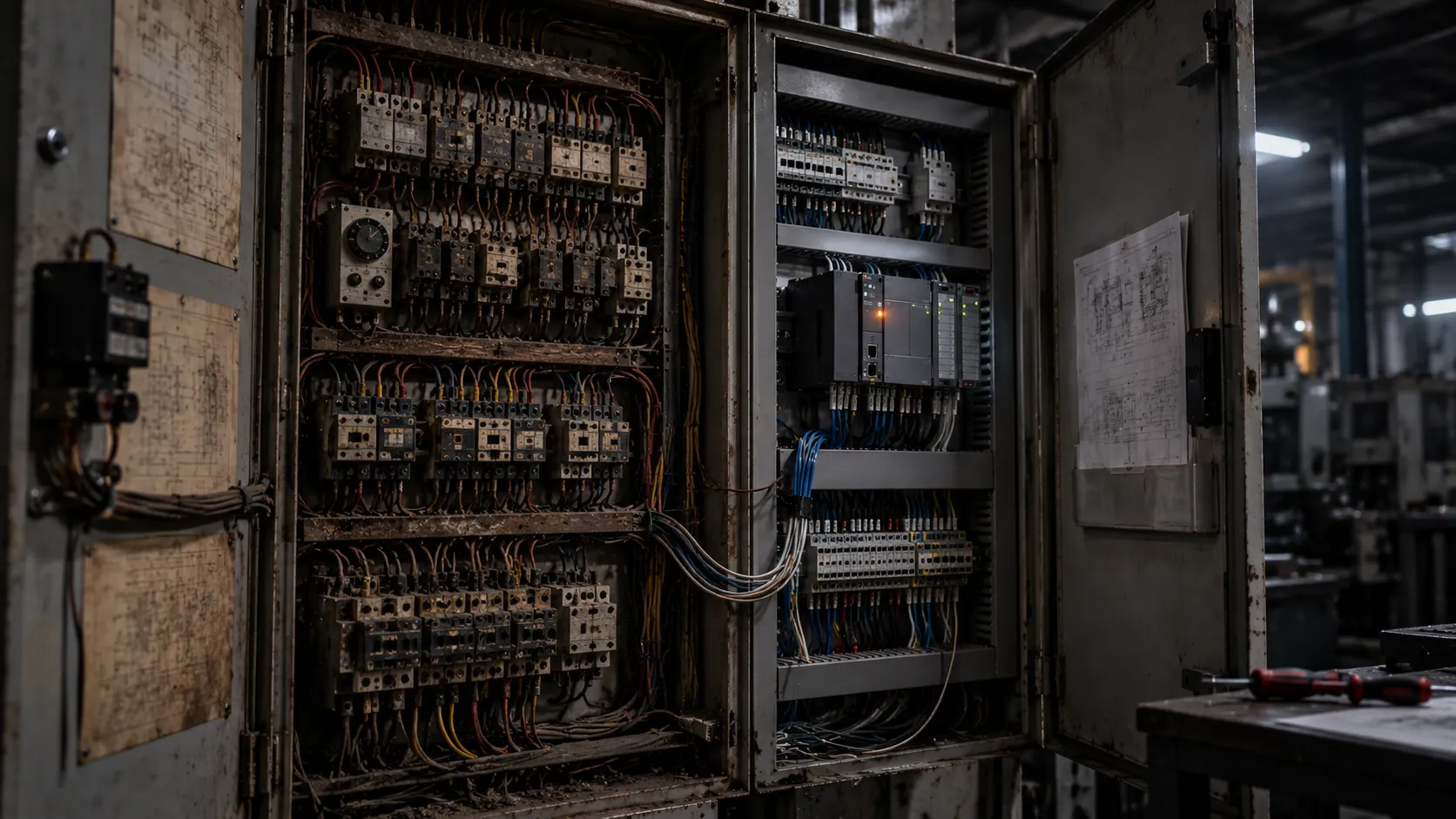
The result is a very common situation: a machine that's mechanically sound sitting behind a control system nobody can maintain. That machine is a retrofit candidate, not a replacement.
Signs pointing toward retrofit
The frame and precision elements are sound. If the structure is rigid, the ways aren't badly worn, and the machine still holds tolerance when it runs, the expensive part of the machine is still good.
The failures are control-side. Intermittent faults, relay failures, obsolete drives, a dying HMI, no documentation for the logic. These are all replaceable.
The process hasn't changed. If the machine is still doing the job you need done, at roughly the throughput you need, the mechanical design is still valid.
Spares are the pain point. When your main problem is sourcing a controller nobody makes anymore, the answer is a modern controller — not a whole new machine.
Signs pointing toward replacement
Retrofitting isn't always right, and it's worth being honest about when it isn't.
The mechanical structure is worn out. If ways are scored, the frame has lost rigidity, or the machine can no longer hold tolerance even when running correctly, new electronics won't fix it.
Throughput requirements have outgrown it. If you need double the output, a retrofit of a machine built for the old rate usually can't get you there. The limitation is mechanical, not electrical.
Safety compliance would need a rebuild anyway. Older machines often predate current guarding and safety-circuit expectations. If bringing it into compliance means rebuilding the structure, you're most of the way to a new machine.
The process itself has changed. If your product has changed enough that the machine's fundamental mechanism no longer suits it, keeping the mechanism is the wrong starting point.
The honest test: if the machine were working perfectly today, with a brand new controller, would it do the job you need for the next five years? If yes, retrofit. If no, replace.
What a retrofit actually involves
A proper controls retrofit is more than swapping a PLC. Done well, it includes:
- Reverse-engineering the existing logic, often from an undocumented program, to understand what the machine actually does
- A new control platform on a currently supported family your team can maintain
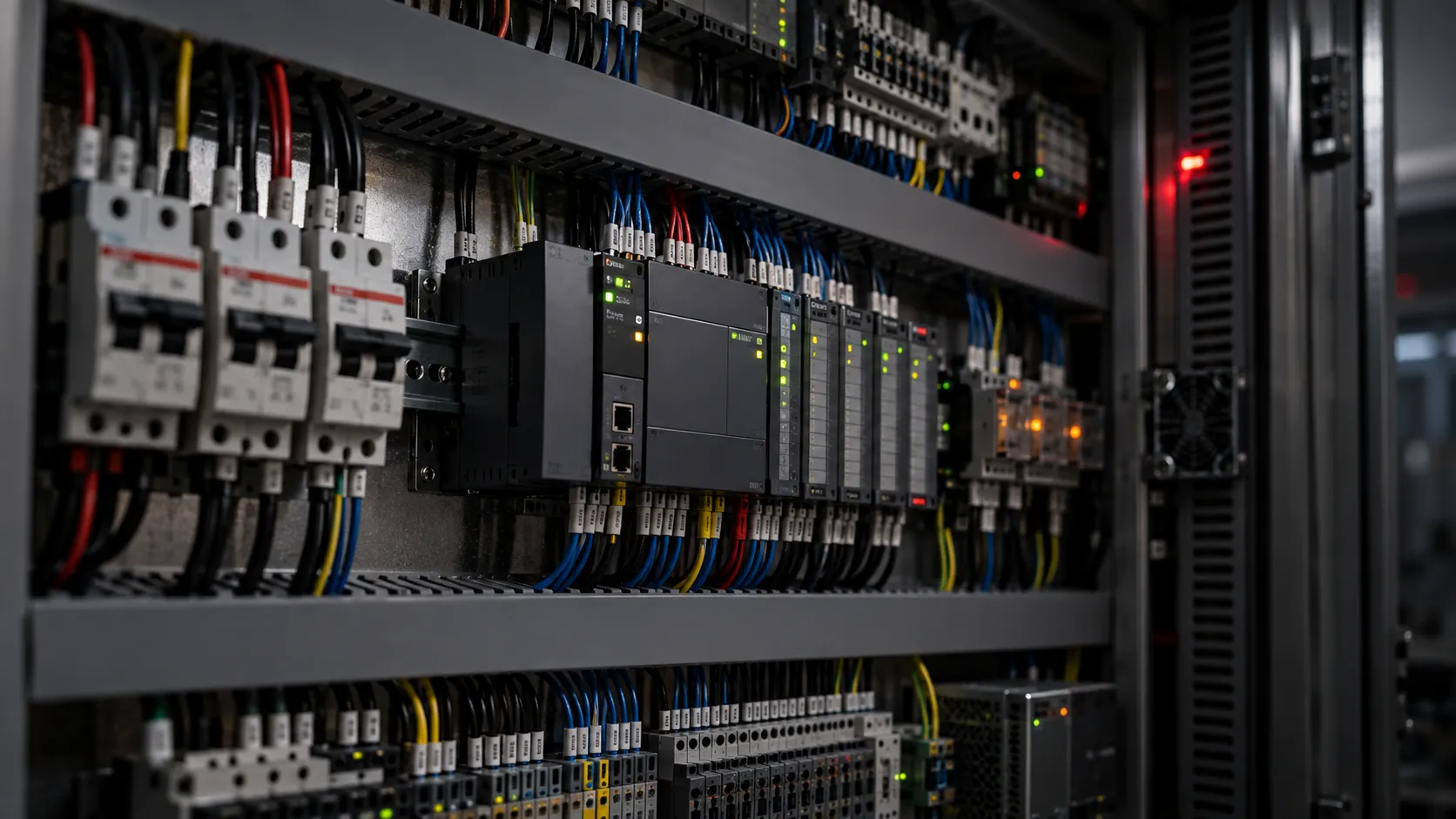
- A rebuilt panel with labelled cores, separated voltage levels, and documented I/O
- Updated sensors and safety circuits to current expectations
- A modern HMI with plain-language alarms and one-glance status
- Documentation — schematics, I/O lists, source code, and operator instructions
That last point deserves emphasis. A large part of a retrofit's value is that the machine becomes maintainable again. The next technician can open the panel and understand it without tribal knowledge.
Budget and downtime, honestly
A controls retrofit typically costs a fraction of replacement, and usually takes far less downtime — a new machine needs procurement, delivery, installation, and commissioning, while a retrofit can often be staged around a planned shutdown.
But it's worth being realistic: retrofits carry more uncertainty than new builds. You're working with an existing machine whose condition isn't fully known until you open it up. A good retrofit partner will inspect before quoting, and will tell you if they find something that changes the recommendation. If you're putting the work out to tender, our checklist for machinery RFQs covers what to include so the quotes you get back are comparable.
The one thing you shouldn't do is keep patching. Every year of "just get it running again" adds cost and risk without moving you forward. Whichever direction the framework points you, a decision beats a drift.